

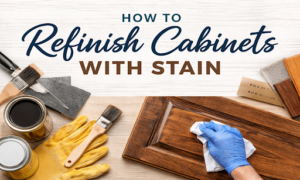




You start by removing the cabinet doors, drawers, and hardware. Label everything so you can put it back in the same place. This prevents alignment issues later.
Clean every surface thoroughly. Kitchen cabinets collect grease that blocks stain from bonding. Use a degreaser or a strong cleaning solution and wipe until the surface feels completely clean, not slick.
At this point, you choose your approach. If the existing finish is thick, damaged, or uneven, you need to strip or sand it down to bare wood. If the finish is intact and you only want to change the color, you can use a gel stain method without sanding.
For the traditional method, follow this exact sequence:
- Remove old finish using a chemical stripper if needed
- Sand with 120-grit sandpaper to remove residue and level the surface
- Sand with 220-grit sandpaper to smooth the wood
- Remove all dust using a tack cloth or vacuum
- Apply wood stain in small sections
- Wipe off excess with a clean rag
- Let it dry completely before adding more coats
- Apply a clear coat in thin layers
- Lightly sand between coats for a smooth finish
Sanding creates an even surface and opens the wood pores so the stain absorbs properly.
Once the stain dries fully, apply a protective finish such as oil-based Clearcoat or water-based sealant. Use thin, even coats. Let each coat dry and lightly sand before applying the next. This builds a smooth, durable layer that protects against moisture and daily use.
Reassemble the cabinets only after everything has fully cured.
Professionals like The English Painters follow this exact process to ensure long-lasting, even finishes that do not peel or fade early.
Can you refinish cabinets without sanding?
Yes, if the existing finish is stable and not peeling, you can refinish cabinets using a gel stain without sanding down to bare wood.
You still need to clean the surface thoroughly. Any grease or residue will prevent the gel stain from sticking evenly.
Gel stain works differently from traditional stain. It sits on top of the existing finish instead of soaking into the wood. This allows you to change the color without removing the old layer.
Follow this process:
- Clean the cabinets thoroughly with a TSP cleaner or degreaser
- Apply gel stain in thin layers using a brush
- Spread evenly with a cloth or foam roller
- Wipe off excess to control thickness
- Allow proper drying time between coats
- Apply additional layers for a deeper color
- Add a protective topcoat if the product does not include one
You can add multiple layers to deepen the color. Each layer increases opacity, so the wood grain becomes less visible over time.
This method requires less effort and less time, but it does not penetrate the wood. The durability depends more on the topcoat than the stain itself.
Which method should you choose?
Choose the sanding method when the cabinets have damage, uneven color, or thick old finishes. This method resets the surface completely. It gives you a more durable and consistent result because the stain bonds directly with the wood.
Choose the no-sanding method when the cabinets are in good condition and you only want to change the color. It saves time and reduces effort. It works well for cosmetic updates but does not correct deep surface issues.
- Sanding method gives stronger adhesion and longer lifespan
- No-sanding method saves time and effort
- Sanding method handles damage and uneven surfaces better
- No-sanding method works best for quick visual upgrades
What materials do you actually need?
You need cleaning agents, sandpaper in multiple grits, stain, and a protective finish. For the no-sanding method, you replace traditional stain with gel stain.
Basic materials include:
- Degreaser or cleaning solution
- Sandpaper (120 and 400 grit)
- Wood stain or gel stain
- Brushes or lint-free cloths
- Tack cloth or vacuum
- Clearcoat or topcoat
- Gloves and a respirator for safety
What mistakes ruin cabinet refinishing?
Skipping surface preparation causes most failures. If grease or old finish remains, the stain will not bond evenly.
Avoid these common mistakes:
- Applying the stain too thickly, which leads to blotches
- Skipping sanding when the surface is uneven
- Ignoring drying time between coats
- Not testing stain color before full application
- Forgetting to seal the surface with Clearcoat
Applying stain too thick creates blotches and sticky surfaces. You control the result by applying thin layers and wiping excess.
How much does it cost to refinish cabinets with stain?
DIY refinishing usually costs between $200 and $500, depending on the size of the kitchen and the products you choose.
Typical DIY cost includes:
- Wood stain or gel stain
- Sandpaper and tools
- Protective topcoat
Professional refinish from $3000 upto $10000 depending on the kitchen size. The price depends on cabinet size, condition, and labor involved.
Companies like The English Painters handle full preparation, sanding, and finishing, which ensures better durability compared to most DIY results.
How long does the process take?
A full refinishing project usually takes four to five days.
- Preparation and cleaning take several hours
- Sanding or surface prep takes one full day
- Staining takes one day including drying
- Sealing and curing takes one to two days
You cannot rush drying. Each layer needs time to cure properly or the finish will fail.
How long will the finish last?
A properly refinished cabinet can last five to ten years.
Durability depends on:
- Surface preparation quality
- Type of stain and Clearcoat used
- Daily wear and kitchen conditions
Regular cleaning and avoiding excess moisture will extend the life of the finish.
What expert techniques improve the result?
These techniques improve consistency and finish quality:
- Use a wood conditioner on soft woods to prevent blotching
- Test stain on a hidden area before full application
- Sand lightly between the Clearcoat.
- Apply thin, even layers instead of thick coats
- Work under good lighting to catch uneven areas
When should you not do this yourself?
You should avoid DIY refinishing if the cabinets have structural damage, deep scratches, or water exposure.
Consider professional help if:
- Cabinets require repair before refinishing
- The kitchen is large and complex
- You want a perfectly uniform, high-end finish
In these cases, hiring experts like The English Painters ensures a consistent finish, proper preparation, and long-term durability.
Final answer
You refinish cabinets with stain by preparing the surface properly, applying stain in controlled layers, and sealing it with a durable Clearcoat topcoat. You can either sand down to bare wood for maximum durability or use a gel stain method for a faster surface-level update. The method you choose depends on the condition of your cabinets and the result you want.
Frequently Asked Questions
Yes, you can stain cabinets without sanding if the existing finish is in good condition. Use a gel stain, which sits on top of the surface instead of soaking into the wood. You still need to clean the cabinets thoroughly to ensure proper adhesion.
Oil-based and gel stains work best for cabinets. Oil-based stains penetrate deeper and provide long-lasting color, while gel stains offer better control and are ideal for refinishing without sanding or stripping.
You typically apply one to three coats of stain. One coat gives a lighter, more natural look. Additional coats deepen the color but reduce visible wood grain. Always let each coat dry before applying the next.
Yes, sealing is necessary. Stain adds color but does not protect the surface. You need a protective topcoat like Clearcoat to prevent damage from moisture, heat, and daily use.
No, stain does not work properly over paint because it cannot penetrate the surface. You must remove the paint completely through sanding or stripping before applying the stain for a proper finish.


